


By Comfort Prince—
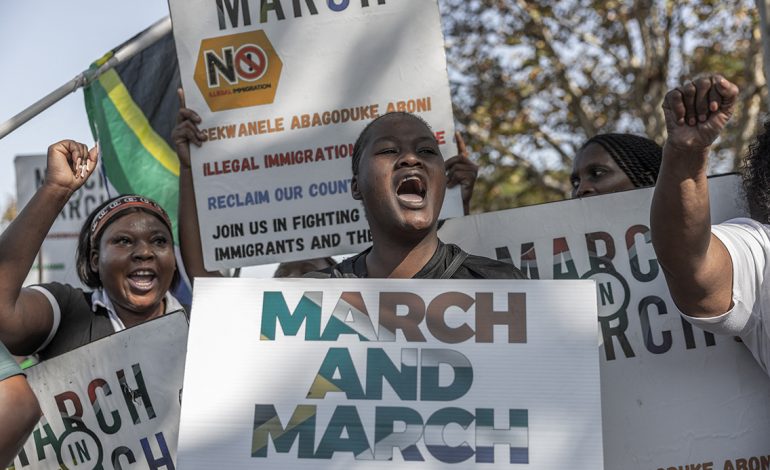
The dream of a united Africa is built on the ideals of solidarity, free movement, and mutual respect among African nations. Yet, for many African migrants living in South Africa, that dream has often been overshadowed by fear, violence, and discrimination. As attacks against foreign African nationals continue to spark outrage, Nigeria and Ghana have repeatedly raised concerns before the African Union (AU), calling for stronger continental action against Afrophobia.
Afrophobia — the prejudice, discrimination, or hostility directed towards Africans because of their nationality or origin — has become one of the most controversial issues confronting African unity. Although often confused with xenophobia, Afrophobia specifically targets fellow Africans, making it particularly troubling for a continent striving towards integration.
South Africa has witnessed several waves of violence against foreign nationals over the years. A 2026 social tension poll revealed that 50% of citizens blamed unemployment and job competition for the conflicts, while 48% cited weak immigration control and 46% attributed them to crime.
According to a Channels Television report, Nigeria has evacuated 1,490 nationals from South Africa, while Ghana has repatriated at least 926. Many victims have come from Nigeria, Ghana, Zimbabwe, Mozambique, Somalia, Ethiopia, and other African countries. Businesses owned by migrants have been looted, homes destroyed, and lives lost. These incidents have strained diplomatic relations and raised questions about Africa’s commitment to the ideals of Pan-Africanism.
Nigeria has consistently condemned these attacks. Following major outbreaks of violence, the Nigerian government evacuated hundreds of its citizens from South Africa and demanded greater protection for Nigerians living there. Ghana has also expressed concern over the safety of its citizens and has urged South African authorities to ensure justice for victims.
The African Union, established to promote unity, peace, and cooperation among African states, has repeatedly appealed for restraint while encouraging member states to address the root causes of the violence. The AU has emphasised that attacks against fellow Africans undermine the goals of the African Continental Free Trade Area (AfCFTA) and the broader vision of African integration.
According to Mazi Jocelyn Johiah, a political science lecturer at Hensard University, Afrophobia and xenophobia are closely related but distinct concepts. “Xenophobia refers to hostility towards foreigners regardless of race, while Afrophobia specifically targets African migrants.
In South Africa, the attacks go beyond ordinary xenophobia because they are often directed at fellow Black Africans and are fuelled by political scapegoating, historical grievances, and economic frustrations.” Johiah added that the African Union must move beyond statements of condemnation by encouraging member states to adopt stronger migration policies, improve conflict prevention mechanisms, and hold perpetrators accountable.
Human rights advocates warn that Afrophobia not only violates fundamental human rights but also weakens Africa’s global image. They insist that governments must invest in public education, strengthen law enforcement, prosecute perpetrators, and promote peaceful coexistence among African communities. Human rights activists and organisations have forcefully condemned the recent waves of Afrophobic violence.
For ordinary Africans, the consequences are deeply personal. Many migrants leave their home countries seeking education, employment, or business opportunities, only to face fear and uncertainty in countries they consider part of the same African family. Their experiences challenge the very meaning of the slogan “Africa for Africans.”
As Nigeria and Ghana continue to push the issue before the African Union, many believe the continent stands at a crossroads. Will Africa remain divided by suspicion and intolerance, or will its leaders strengthen the bonds of unity that inspired the creation of the AU? The answer may determine whether future generations inherit an Africa defined by shared prosperity or by walls built between brothers and sisters who share the same continent.
As Africa pursues greater economic integration through the African Continental Free Trade Area, the fight against Afrophobia has become more than a human rights issue. It is a test of the continent’s commitment to Pan-Africanism.
Whether African leaders choose dialogue, justice, and accountability over division will help shape the future of millions of Africans who dream of crossing borders not as strangers, but as brothers and sisters united by their shared continent.
*Comfort Prince is a student of Multimedia Communication & Film Studies, Hensard University, Bayelsa State


