


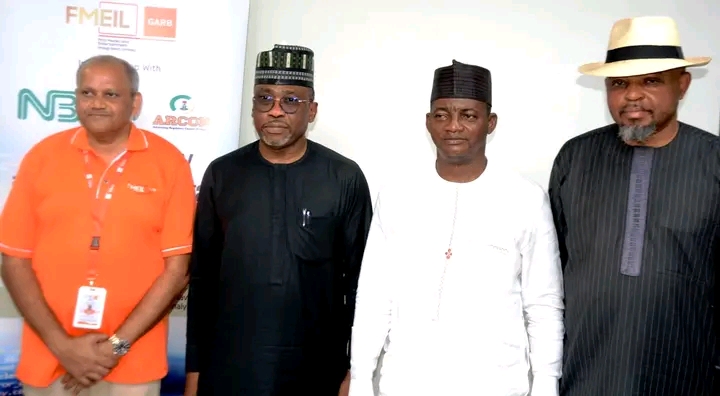
By Chido Nwakanma—
For decades, Nigeria’s broadcasting industry has relied on estimates and assumptions. Advertisers bought airtime based on diaries—paper records kept by viewers who manually logged what they watched. Broadcasters estimated their reach, and content producers had little reliable data to guide their investments. But all of that is changing.
On Tuesday, 1 September 2026, the Federal Government officially launched the first phase of the national Audience Measurement System (AMS) in Lagos—a move that industry stakeholders are calling a transformative milestone for Nigeria’s broadcasting ecosystem. The rollout follows the June 2026 unveiling of the Digital Switch Over (DSO) and marks the culmination of years of planning and technical testing, as well as the largest television Establishment Survey ever conducted in Nigeria.
At its core, the AMS is designed to answer three fundamental questions: who is watching, what they are watching, and when they are watching. This information is vital to broadcasters, advertisers, content producers, investors, and regulators.
The Minister of Information and National Orientation, Mohammed Idris, described the initiative as a critical step towards building a more modern, credible, and data-driven broadcasting industry. “A reliable audience measurement system can strengthen investor confidence, support the production of high-quality Nigerian content, and create opportunities across our media and creative industries,” he said.
Unlike the age-old diary method, which relied on viewers recording or recalling what they watched, the new system uses Peoplemeter devices to passively capture viewing behaviour. The devices, supported by data-enabled routers and backend data-centre infrastructure, record programmes watched, viewing duration, and audience demographics, then transmit the information daily to a central data centre.
The Lagos rollout is built on a solid foundation: Nigeria’s first nationwide television Establishment Survey, which covered 60,000 households across all 36 states and the Federal Capital Territory. Completed in the first half of 2023, the survey included 7,000 households in Lagos and covered all 774 local government areas.
Patrick Gomes, Chief Operating Officer of FMEIL-GARB, explained that the survey was designed to establish a statistical baseline for selecting households to form the national television audience panel, and to ensure the sample reflects Nigeria’s television-owning population.
The Lagos deployment follows technical testing and a proof-of-concept pilot conducted in selected homes, with results presented to stakeholders in Abuja in the second quarter of 2024. FMEIL, licensed by the NBC and ARCON to establish the audience measurement system, partnered with the Bulgarian technical company GARB to develop infrastructure to international standards and adapt it to Nigeria’s advertising market.
Selected households participating in the programme will receive a monthly 36GB data incentive, currently valued at about N11,000, to cover their browsing requirements. In addition, a quarterly incentive based on compliance levels will be introduced; households with higher compliance levels will receive higher incentives.
The team is transparently recruiting panel households from the Establishment Survey database. The Minister emphasised that Nigerians deserve clear, credible information on how the system works, why households are selected, and what participation entails.
The rollout has not been without challenges. Some potential panel members may no longer recall participating in the earlier Establishment Survey. Others may be cautious about unfamiliar calls or about allowing equipment to be installed in their homes. The Minister acknowledged these concerns as legitimate, which is why public engagement is important.
The NBC Director-General, Charles Ebuebu, appealed to Nigerians to embrace the equipment being installed in selected homes, assuring them that it was designed solely to measure television consumption. “The equipment would capture programmes watched, viewing duration, and audience demographics without monitoring other household activities,” he said.
For advertisers and media agencies, the implications are significant: media buying could increasingly rely on independently generated audience data rather than on estimates or assumptions.
ARCON’s Fadolapo said the development would improve accountability for media investments by enabling advertisers and agencies to assess campaign effectiveness and cost efficiency.
The NBC’s Ebuebu disclosed that the DSO is already prompting broadcasters to migrate from terrestrial to digital platforms, with the NBC receiving 20 applications within a week. Broadcasters are seeking wider coverage to demonstrate greater audience reach when negotiating with advertisers.
This initiative aligns with President Bola Ahmed Tinubu’s Renewed Hope Agenda, particularly its emphasis on digital transformation, innovation, investment, job creation, and economic diversification. The Minister of Information and National Orientation, Alhaji Muhammed Idris, reiterated that the broadcasting sector is not only a source of information and entertainment but also an important economic ecosystem that supports journalists, producers, filmmakers, actors, advertisers, technology providers, and many other professionals.
Rotimi Pedro, Executive Chairman of FMEIL, perhaps summed it up best when he described the system as “decoding currency” in Nigeria’s advertising market. In a market where the value of television advertising depends heavily on the size and composition of the audiences reached, reliable data is indeed currency.
The national AMS rollout will be conducted in phases, with Lagos as the first phase, followed by deployment in Port Harcourt, Ibadan, and other major cities, ahead of a nationwide rollout. As Nigeria completes its transition from analogue to digital broadcasting, the Audience Measurement System is a critical component of a more transparent, professional, and vibrant broadcasting industry.


