


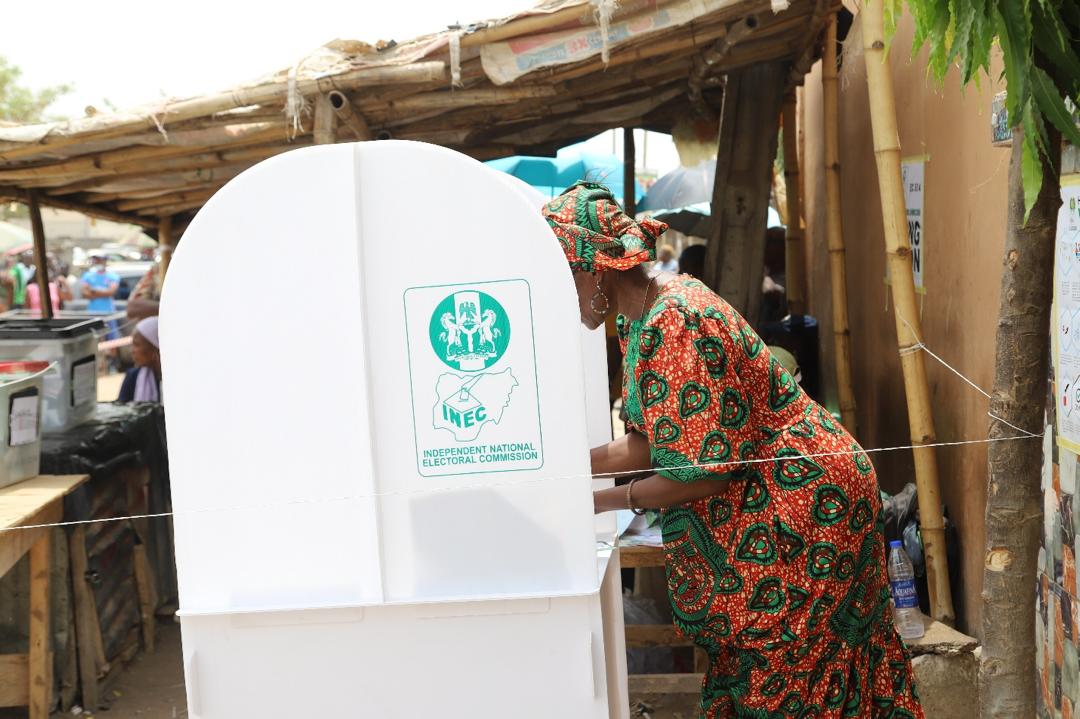
The United Nations Entity for Gender Equality and the Empowerment of Women (UN Women) has raised concerns over the low representation of women in Nigeria’s 2027 general elections, revealing that female candidates account for only 9.7 per cent of the total candidates.
The organisation warned that Nigeria risked deepening its gender imbalance in governance if voters allowed prejudice against women to influence their choices at the polls.
It consequently launched the #VoteHer2027 campaign, urging Nigerians to judge candidates in the forthcoming elections by their competence, integrity, experience and policy proposals rather than their gender.
UN Women said the 9.7 per cent representation of women among candidates underscored the scale of women’s exclusion from the country’s political process, despite accounting for nearly half of Nigeria’s population.
It noted that even if every female candidate emerged victorious in the elections, women’s representation would still remain significantly below equal participation in elected offices.
The organisation, in a statement issued in Abuja on Wednesday, said women should neither be elected merely because they were women nor denied electoral support because of their gender.
It maintained that women’s participation in governance was fundamentally an issue of fairness, equal rights and social justice, stressing that decisions taken by elected representatives affected both men and women.
“Women must have a fair chance to help shape the laws, policies and priorities that govern their lives and communities,” it said.
The organisation argued that allowing gender stereotypes to determine electoral choices would undermine democratic representation and weaken the country’s commitment to equality.
It also recalled that Nigeria had made several international and national commitments to promoting women’s participation in political leadership, including the Convention on the Elimination of All Forms of Discrimination Against Women (CEDAW), the Maputo Protocol and the Beijing Platform for Action.
It said Nigeria’s National Gender Policy also provided for affirmative action, with representation targets ranging from 30 to 50 per cent.
However, the persistent gap between these commitments and women’s actual participation in elective positions remained a major concern.
As part of efforts to change public attitudes ahead of the elections, UN Women said the #VoteHer2027 campaign would deploy radio, social media and partnerships with media organisations to challenge discriminatory narratives and promote issue-based electoral choices.
A major component of the initiative is NO BE BY GENDER, an issue-based radio drama and expert call-in programme to be broadcast on Radio Nigeria Network.
The programme is designed to use relatable stories and discussions with experts and gender advocates to expose the stereotypes, myths and socio-cultural barriers that discourage Nigerians from supporting women seeking elective positions.
Listeners will also be encouraged to interrogate their assumptions about women in leadership and assess candidates based on their ideas, track records and capacity to deliver.
The organisation said it would further engage media partners to bring gender advocates and other experts into public discussions on women’s political participation, while encouraging fair and balanced coverage of female candidates.
It urged journalists to avoid narratives that reinforce gender stereotypes and instead give women candidates the same level of scrutiny and visibility afforded their male counterparts.
UN Women also called on political and traditional leaders, civil society organisations, influencers and community stakeholders to intensify advocacy against gender discrimination in the electoral process.
It warned that failure to address the barriers confronting women in politics would further widen the gender gap in governance and undermine the principle of inclusive democratic representation.
With women accounting for only 9.7 per cent of candidates, the organisation said Nigeria could not afford to compound their existing political marginalisation with prejudice at the ballot box.
It therefore urged voters to look beyond gender and make electoral decisions based on the quality of candidates, their integrity, experience and capacity to address the country’s challenges.
The campaign comes amid renewed attention to women’s political representation ahead of the 2027 elections, with the debate increasingly focusing on how Nigeria can translate its constitutional and international commitments to gender equality into meaningful participation in political decision-making.


