

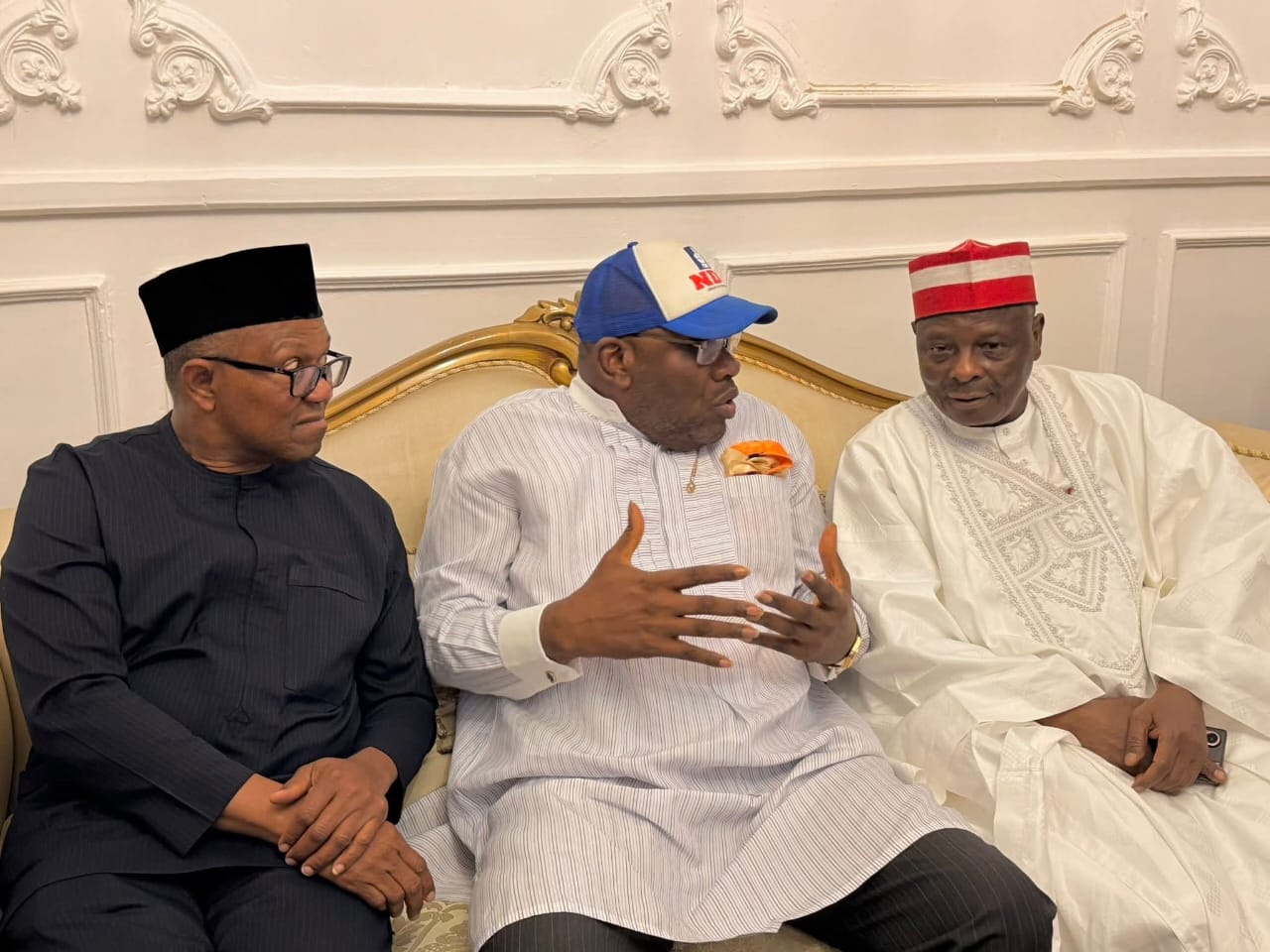
The Nigerian political landscape is stirring with speculation following a closed-door meeting held Sunday between two prominent figures – former governors and past presidential candidates Peter Obi and Rabiu Kwankwaso – and leading officials of the National Democratic Congress (NDC).
The meeting, which took place at the NDC’s secretariat in the capital, Abuja, was led by the party’s National Leader, Senator Henry Seriake Dickson.
Both Obi, formerly of the Labour Party, and Kwankwaso, who led the New Nigeria Peoples Party (NNPP), are notably former members of the African Democratic Congress (ADC), a detail observers are keen to highlight as potentially significant.
While the precise details of the discussion remain undisclosed, the gathering has fuelled intense conjecture about potential realignment within the opposition bloc ahead of future electoral contests.
Sources suggest the meeting was exploratory in nature, with all parties seeking to understand potential avenues for collaboration. The 2023 Presidential election saw a fragmented opposition, and the possibility of a unified front has been a recurring theme in political circles ever since.
Senator Dickson, a seasoned politician and former Governor of Bayelsa State, has been actively advocating for a broader coalition capable of challenging the ruling All Progressives Congress (APC).
His leadership of the NDC, a party currently holding a relatively small number of seats at both state and federal levels, is seen as a potential focal point for such an endeavour.
“This meeting is undoubtedly a significant development,” commented political analyst and party member who wants to remain anonymous. “Both Obi and Kwankwaso command considerable regional support, and their combined influence could present a formidable challenge.
“However, the sticking points will be navigating their differing political ideologies and, crucially, agreeing on a leadership structure.”
The meeting comes at a time of growing discontent with the current economic climate and rising security concerns across the country. The APC, while still holding power, has seen its popularity wane in recent months, creating an opening for a revitalised opposition.
Neither Obi nor Kwankwaso have issued official statements regarding the meeting. The NDC, however, released a brief statement confirming the encounter, describing it as “a productive exchange of views on the state of the nation and the need for a stronger, more unified opposition.”
The coming weeks will be crucial in determining whether this meeting represents a genuine move towards a formal alliance, or simply a preliminary discussion amongst political heavyweights.
The Nigerian electorate, and indeed the wider political establishment, will be watching developments closely.


